Imbolc is the Gaelic festival of early spring, celebrated on February 1, with its eve on January 31. It belongs to Brigid, both the goddess and the saint, and its oldest customs are small and homely: weaving a Brigid’s cross, making a bed for Brigid by the fire, lighting candles and noticing the first signs of spring. Here’s what Imbolc means, where its traditions come from, and how to celebrate it at home.
Key takeaways
In this post
Imbolc falls on February 1, roughly halfway between the winter solstice and the spring equinox, and in the Irish calendar it’s the first day of spring. In modern pagan practice it’s one of the eight sabbats on the Wheel of the Year.
The meaning of the name comes from an old source. Cormac’s Glossary, a medieval Irish glossary translated into English in 1868, gives the word as oimelc, “beginning of spring”, and explains it as oi-melg, “ewe-milk”: “that is the time that sheep’s milk comes”. A festival of the first milk is a festival of the first sign that winter is ending.
The festival is still very much alive. Since 2023, Ireland has had a public holiday “in celebration of Imbolc/St. Brigid’s day”, the first Monday in February, or February 1 itself when it falls on a Friday.
Brigid (Brigit, Bríd, Bride) is two figures who share a name and a day.
The goddess. Cormac’s Glossary describes Brigit as a poetess and daughter of the Dagda, “the goddess whom poets adored”. Her sisters were Brigit the physician, a “woman of leechcraft”, and Brigit the smith, a “woman of smithwork”. That’s where the familiar trio of poetry, healing and smithcraft comes from.
The glossary also tries to explain her name as breo-saigit, “a fiery arrow”. The notes in the 1868 edition call that etymology absurd and connect her name instead with Brigantia, an older Celtic goddess. So even the oldest source on Brigid comes with a footnote disagreeing with it, which I find kind of charming.
The saint. St Brigid of Kildare is one of Ireland’s patron saints, and her feast day is February 1. Most of the customs recorded in Ireland, like the crosses, the prayers and the welcoming of Brigid into the house, belong to her feast. People who celebrate Imbolc today honor Brigid as a goddess, as a saint, or as both.
The best-known Imbolc tradition is weaving a St Brigid’s cross on January 31, the eve of her feast. According to the National Museum of Ireland, crosses were made from straw, rushes and reeds most often, but also grass, hay, wood, goose quills, wire and fabric. Designs varied by region: diamond, interlaced or wheel-shaped, with two, three or four arms. The material was sprinkled with holy water first, a prayer welcoming the saint was often said, and the finished crosses were hung in homes and animal sheds to ask for St Brigid’s blessing.
The four-armed cross most people picture today became the best known after 1961, when Irish television used it as its emblem.
On the eve of Imbolc, households welcomed Brigid in with a bed of her own. One version, recorded in Ireland’s Schools’ Collection of folklore in the 1930s, comes from the Hebrides in Scotland: a bundle of rushes was dressed in women’s clothes and laid in a basket with a wooden club, and the basket was set beside the fire overnight. In the morning, the family looked at the ashes on the hearth. A mark from the club was a sign of a prosperous year.
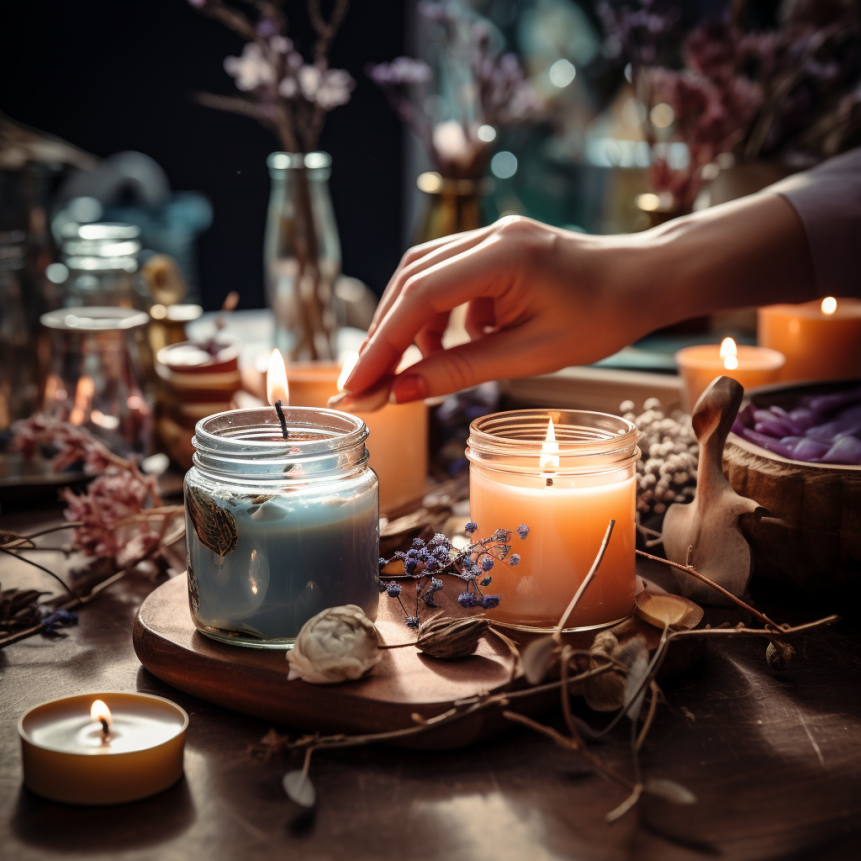
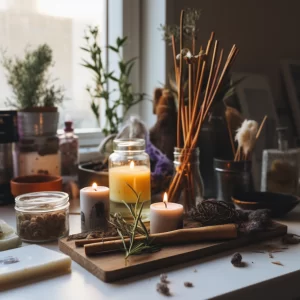
Imbolc comes as the days are visibly getting longer, and candles are part of most modern celebrations: lit on an altar, in a window or at dinner to welcome the light back.
Imbolc is a natural point to look at the year ahead, a month after the new year’s resolutions have settled. Think about what you’d like to grow this spring, in your home, your work or yourself, and write it down.
Spring cleaning starts here. Clear one room, your altar or even just a shelf, and open a window to let fresh air in. A clean space makes room for whatever you’re planting next.
Rushes are traditional, but you can use what grows near you. Here in the desert Southwest, rushes and straw aren’t easy to find, so I’d use beargrass (Nolina microcarpa) instead. Its long, flexible leaves weave much like rushes once they’re dried.
My Imbolc crafts guide has more things to make for the season.
An altar gives your celebration a center. Some ideas:
If you’d like an altar that changes through the year, my guide to an altar for the Wheel of the Year goes through every sabbat.
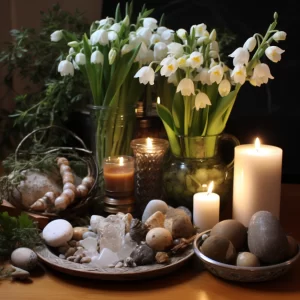
Planting is a way to take part in the season instead of just watching it. Start seeds indoors, plant bulbs like snowdrops or crocuses, or use seed paper in your crafts and plant it afterward. With each seed, you can set an intention for something you want to grow.
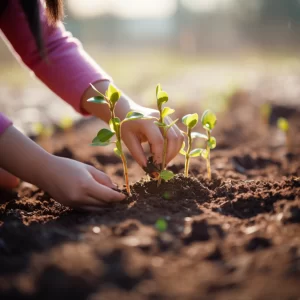
Go outside and look for the first signs of spring: returning birds, buds, new green growth and softer ground. Collect a few natural things for your altar if you like, taking only what you need.
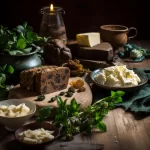
Dairy is the food most tied to Imbolc, which makes sense for a festival named after milk. Butter, cheese, bread and seeds all fit. My guide to traditional Imbolc foods has recipes and ideas for an Imbolc feast.
Some prompts to start with:
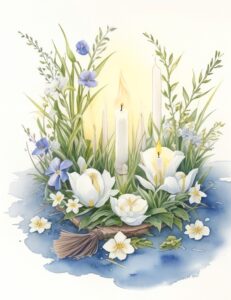
| Symbol | What it stands for | Where it comes from |
|---|---|---|
| Milk and dairy | Fresh food at the end of winter | The name itself: “ewe-milk” in Cormac’s Glossary |
| St Brigid’s cross | Brigid’s blessing on the home and animals | Woven on Jan 31 and hung in homes and sheds |
| Brigid’s Bed | Welcoming Brigid into the house | Made by the fire on the eve of her feast |
| Candles and flame | The returning light | Modern celebrations; Brigid’s flame |
| Snowdrops and early flowers | The first signs of spring | The season’s first blooms |
| Seeds | Plans for the year ahead | Spring planting and intention-setting |
Imbolc is celebrated on Monday, February 1, 2027, with the eve on Sunday, January 31. In Ireland, the St Brigid’s Day public holiday falls on the same day, because February 1, 2027, is the first Monday of the month.
The Gaelic festival of the first day of spring, on February 1. It honors Brigid and the first signs of new life after winter.
Cormac’s Glossary explains the name as “ewe-milk”, the time of year sheep start giving milk.
Brigid. In Cormac’s Glossary she’s the goddess of poets, with two sisters of the same name, a healer and a smith. St Brigid’s feast is also February 1.
Make a Brigid’s cross on the eve, light candles, clean and refresh your space, set up an altar, plant seeds and share a meal with dairy.
After Imbolc, the wheel turns to spring proper: see how I celebrate Ostara in the desert. For the sabbat before Imbolc, read about celebrating Yule instead of Christmas.