
There’s something beautiful about gathering with loved ones during the darkest time of the year, knowing that each day ahead will bring a little more sunlight. That’s what Yule means to me, and it’s why we chose the winter solstice, December 21, for our wedding this year.
Yule and Christmas fall only a few days apart and share so many traditions that it’s easy to blur them together. Here’s how they differ, where they overlap, and how to celebrate Yule instead of Christmas, or alongside it.
Key takeaways
In this post
Yule is a midwinter festival with pre-Christian roots in northern Europe, celebrated today on the winter solstice. Christmas is the Christian holiday celebrating the birth of Jesus on December 25. Christmas gradually took Yule’s place in northern Europe, and often its name: in Norwegian, Swedish and Danish, the word for Christmas is still jul.
| Yule | Christmas | |
|---|---|---|
| When | The winter solstice, December 21 or 22 in the Northern Hemisphere | December 25 |
| Roots | A pre-Christian midwinter feast in Scandinavia and Anglo-Saxon England | The Christian feast of Jesus’ birth, first recorded on December 25 in a Roman almanac from the mid-300s |
| What it celebrates | The longest night, and the sunlight beginning to return | The birth of Jesus, and for many people a family holiday |
| Typical traditions | Candlelight, feasting, evergreens and natural decorations | The Christmas tree, gift giving, carols, church services, Santa Claus |
| Who celebrates today | Modern Pagans, including Wiccans and Druids, and anyone drawn to a solstice holiday | Christians, and many non-Christians as a cultural holiday |
Yule is a midwinter festival from northern Europe that is older than Christianity there. Today it’s celebrated on the winter solstice, the shortest day and longest night of the year, as a festival of the returning light.
The oldest records come from two places. In England, the monk Bede wrote in the early 700s that the Anglo-Saxons called their two midwinter months Giuli, named “from the day when the Sun turns back [and begins] to increase.” In Norway, the saga of King Haakon the Good describes the heathen feasts of the time: farmers brought their own food and ale, animals were slaughtered, and fires burned under cauldrons down the middle of the temple floor. Toasts were drunk to Odin for victory, to Njord and Freyr for prosperity and peace, and to kinsmen buried in the old burial mounds. Yule was one of these feasts. At one Yule, the saga says, the farmers made Haakon, a Christian king, eat a few pieces of horse liver and drink every toast without making the sign of the cross.
That saga was written down around 1230 by Snorri Sturluson, a Christian Icelander looking back about three centuries, so historians read it with care. Even so, the Norse accounts agree on the heart of it: a feast in the dark of winter, with plenty of ale. An Old Norse dictionary from 1874 sums up the heathen Yule as “a great merry-making,” with tales of ghosts and ogres attached to it.
The Yule most people celebrate today is newer. Historian Ronald Hutton traced the modern Pagan Wheel of the Year to Britain in the 1950s. Gerald Gardner’s Wiccan coven began marking the solstices by 1953, and at Doreen Valiente’s first midwinter with the group there was no ritual for it yet, so Gardner asked her to write one a few hours before it began. The full cycle of eight festivals was settled in 1958. Wiccans, and Pagans who follow Scandinavian traditions, call the winter solstice Yule. Many Druids call it Alban Arthan.
On the Wheel of the Year, the next sabbat after Yule is Imbolc, in early February.
The winter solstice falls on Monday, December 21, 2026, in the Northern Hemisphere. Most people mark Yule on the solstice itself, and some keep celebrating for days afterward. The old Norwegian Yule lasted three nights.
As a midwinter feast in northern Europe, yes. Yule was kept there before Christianity arrived, and Christmas later took its place.
Christmas has a long history of its own. The earliest mention of December 25 as Jesus’ birthday is in a Roman almanac from the middle of the 300s. It’s often said that Christians borrowed the date from a pagan winter festival, but the biblical scholar Andrew McGowan points to another explanation: some early Christians believed Jesus was conceived on the same date he died, in late March, which puts his birth nine months later, on December 25. He’s honest that we can’t be entirely sure.
The two holidays came together in Norway. According to the saga of King Haakon the Good, who was already a Christian when he came to Norway, Haakon made it law that Yule begin at the same time Christians kept Christmas. Before that, the saga says, Yule began on midwinter night, in mid-January, and lasted three nights. Under the new law every household had to brew ale from a set measure of grain and keep the holiday as long as the ale lasted, or pay a fine. Sweden’s national museum of cultural history notes that people there used to talk of “drinking Christmas.”
Fewer than you might think, or at least fewer that anyone can prove. Many customs with “Yule” in the name were first recorded centuries after the old Yule ended. Even Sweden’s Nordiska museet says it’s uncertain whether Christmas there is connected to the pre-Christian midwinter feasts at all. Here’s what the records show:
Yuletide means the Yule season, or Christmastime. “Tide” is an old word for a time or season, as in Eastertide. In Old English, geól already meant Christmas, and the Old Norse jól was a heathen feast whose name was later applied to Christmas. Where the word itself comes from is still debated.
What draws me to Yule is the meaning behind the winter solstice: the longest night, and the light slowly coming back after it.
That’s why we chose the solstice for our wedding. I love the idea of starting our marriage at the turning of the season. It’s a time to reflect on everything that brought us here, celebrate the people who have been part of our lives, and look forward to a new adventure together. We’re bringing our families together for an evening surrounded by greenery, dried orange garlands, cinnamon bundles and other natural decorations.
I also love how Yule asks us to appreciate the seasons and the natural world around us.
For me, the heart of Yule is togetherness: gathering around a table, sharing food, appreciating the people we love, and remembering that even during the longest nights, brighter days are ahead. Everything else is a way of getting there.
Feasting runs through the old accounts of Yule, so start with a meal. It doesn’t need to be grand. What matters is who’s at the table. If you want something warm for the longest night, try a mug of spiced cacao.
I especially love working with botanicals because they bring so much character to a space. Oranges add warmth and color, cinnamon has that wonderful, familiar winter fragrance, and evergreen branches remind me that life continues even during the coldest, darkest season.
As someone who studies herbalism, I also appreciate that plants have stories beyond their medicinal uses. They’ve been part of celebrations, family traditions, food and seasonal decorations for generations. I love that something as simple as a bundle of cinnamon or a string of dried oranges can make a celebration feel more connected to nature.
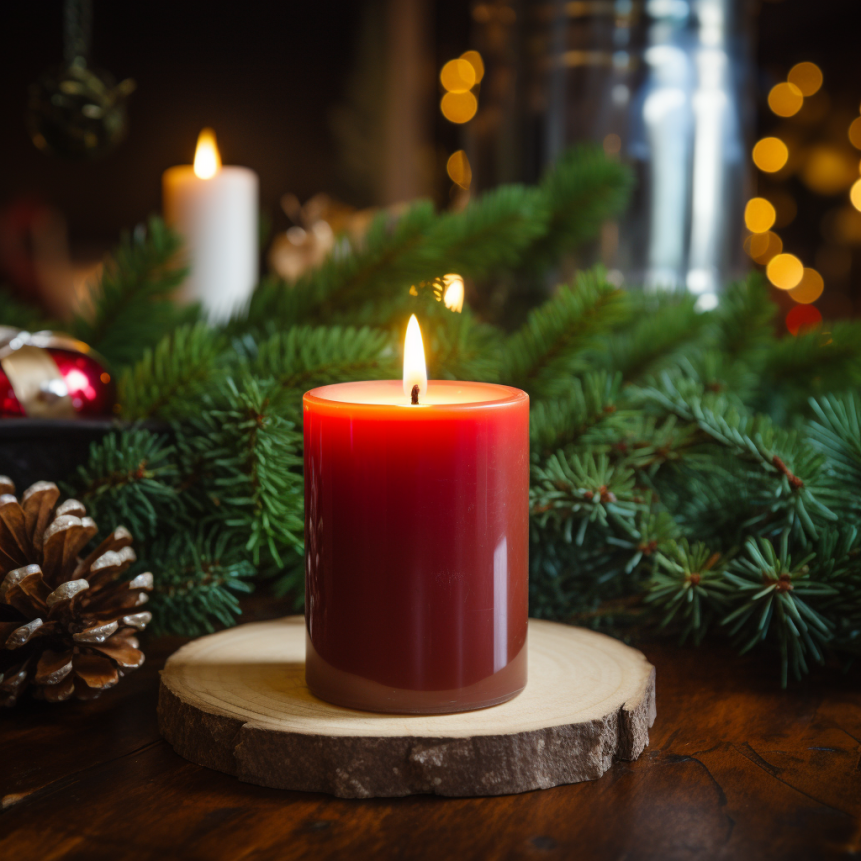
Light candles as the sun sets on the longest night, or get up early to watch the first sunrise after the solstice. If you keep a seasonal altar, Yule is a natural time to refresh it. It’s also a good night to look back on the year behind you, the same way I’m looking back on everything that brought us to our wedding.
Living in the Sonoran Desert, winter looks very different from the snowy forests often pictured in Yule celebrations, but the changing seasons are just as meaningful here. If your winter has more cactus than pine, I share desert ideas in celebrating Yule in the Southwest.

Yes. I don’t think celebrating Yule needs to mean giving up everything we love about Christmas. There are so many overlapping traditions, from decorating with evergreens to sharing meals, exchanging gifts and spending time with family.
I don’t like how materialistic the Christmas hype has gotten, and Yule brings back more intentionality in the season for me. It gives those familiar celebrations another layer of meaning. Instead of focusing entirely on the holiday itself, I like thinking about the changing seasons, the return of sunlight and the chance to reflect on the year behind us.
I don’t believe there’s one correct way to celebrate. Different families have different traditions, and I think there’s something wonderful about bringing them together while creating new ones of our own. A few ways to blend the two:
Mostly modern Pagans, including Wiccans and Druids, along with people who want a winter holiday built around the solstice and the natural world. In Scandinavia, jul is simply the everyday word for Christmas.
Yes. There’s no one correct way to celebrate. Gathering people together, sharing a meal, decorating with greenery and noticing the light come back don’t require any particular belief.
Let them help make the decorations: stringing dried orange slices, tying cinnamon bundles or gathering greenery on a winter walk. Telling them why the days start getting longer after the solstice gives them the reason behind it all.
Mostly what goes on it. A Yule tree is decorated for the solstice, often with natural things like dried oranges, pinecones and lights for the returning sun. The decorated tree itself comes from the German Christmas tradition.
